Peter Grant: MyPsyche
“Growing up, I went to six or seven different schools. There was a lot of moving about. I think I had to become a lot more mature, a lot quicker than most.”

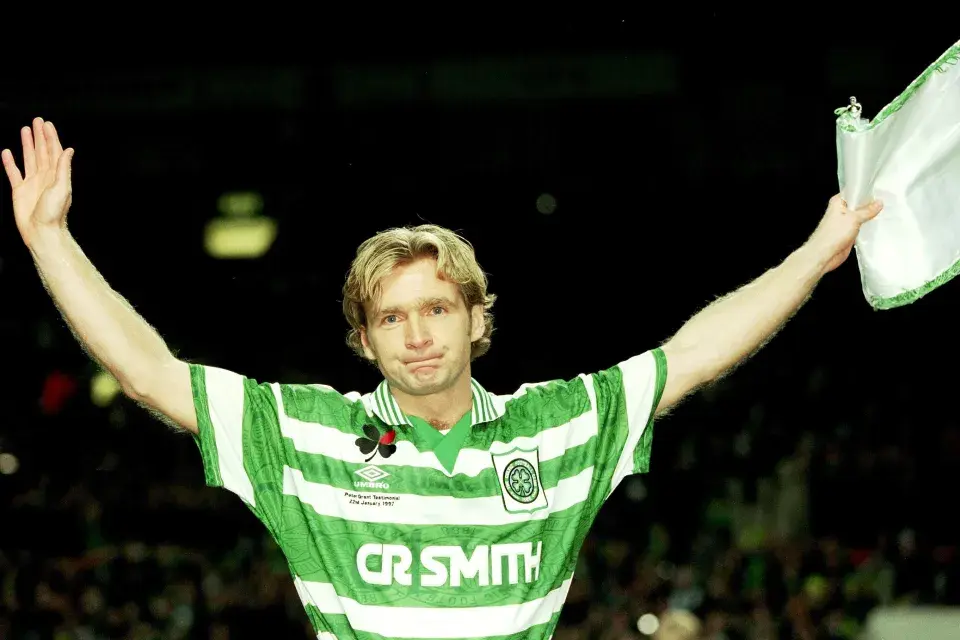
From the outset, ex-Falkirk, Plymouth Argyle and Greenock Morton defender Peter Grant’s childhood was shaped by transitions. Due to his Dad’s career as a celebrated player for the likes of Celtic and a coaching career that took him to Norwich City, West Ham and the Scottish national team, moving regularly meant new environments, new schools and new social circles. While that instability could be challenging, it ultimately helped Peter develop a level of adaptability that would later prove invaluable within football and his career now following retirement.
“It wasn’t just from a football point of view, but integrating into new friendship groups at school was massive for me. You could get really close to building a solid group of friends and then suddenly be moving on again.
“Overall, it shaped me to be quite mature and comfortable not just around kids my own age, but adults as well.”
That early exposure to change helped him become adaptable. He learned how to build relationships quickly, communicate with different types of people and find his place in new environments, skills that naturally transferred into academy football and dressing room settings.
“I’ve always felt I’ve been open to holding a conversation with anybody. That helped, especially going into dressing rooms when you’re younger. It can be daunting with cliques and existing friendship groups, but I always felt I could show my personality and earn respect.”
A Measured Introduction to Football
Despite his clear engagement in football from a young age, there was no rush to fully immerse Peter in the academy system too early on. His parents, aware of the demands of the game, prioritised balance.
“I had the opportunity to join Southampton at six or seven, but my mum and dad stopped me because they felt I was too young for that environment.
“They didn’t want me to be consumed by football too early. They wanted me to enjoy being a kid for as long as possible.”
This approach ensured that football developed naturally, without becoming overwhelming. Even with a strong footballing background in the family, there was no pressure placed on him to follow a specific pathway.
“They were never going to put pressure on me to go down that route. I think they knew there were glimpses of a pathway there, but they wouldn’t corner me into it.”
Understanding Development Beyond Game Time
Progressing through the academies at Bournemouth, West Ham and Norwich, he was exposed to different environments and standards. One of the biggest learning points came during his time at West Ham, where the physical and competitive demands became clearer.
“That was the biggest eye-opener. You start to realise there are real levels.
“In hindsight, I probably wasn’t at the level of some of those boys physically. I was a late developer and grew into my body later than them. They already had six packs, that wasn’t me. That’s why a lot of people look between English and Scottish academies, U18’s look like a men's team down there, physically."
While Peter’s game time was at points limited, the experience proved valuable in other ways, particularly through coaching and exposure to higher standards.
“That’s probably one of the biggest lessons in academies. When you get to that U16 or U17 stage, it’s not always about game time. You need to understand that senior football doesn’t work like that. Sometimes it’s about developing, learning and fighting for your place.”
You hear it all the time, a parent’s son or daughter gets dropped for two or three matches and they’re firing over a text to the coaching staff threatening a move elsewhere for their child. Reflecting on that period, Peter instead recognises the long-term benefit of staying within a demanding environment rather than seeking immediate playing opportunities elsewhere.
“Looking back now, that period was probably the best thing for me. Fighting to improve and really force my way back into a really competitive team. It helps you improve as a player and develop that inner resilience, something so important if you’re to make it as a professional in the game.”
Unlocking a New Mentality in Scotland
Peter was given his first professional deal at Peterborough United, coming up against tried and tested men whilst as a youngster on-loan at Thurrock FC and Histon FC and successfully returning from an ACL injury. However, in 2014, Peter made the move back up north to Scotland, signing for Falkirk, a period in which he began to notice a clear shift in perspective and confidence.
“The pressure I put on myself was to perform at that level and try to be the best centre-back in the league. I ended up moving in myself after a while that independence, having the trust from the manager and the rest of the team, I found myself in a groove where every time I stepped onto the pitch I was convinced I was going to dominate.

“I always felt my best came against the bigger teams - we had Rangers, Hearts, Hibs in the league at that point. I wanted to go into those games and show I was better than what they had.I knew that going up against those strikers, they would help me bring out the best in me.”
It wasn't just a case of turning up to Scottish Cup Final's or coming up against the likes of Kris Boyd, Jason Cumming and Kenny Miller and deciding he fancied playing well that day, the confidence came through preparation and approaching these games with specific mental frameworks.
“Visualisation was massive for me. I was big on talking to myself and having that pinpoint focus. I had routines and habits I stuck to religiously, probably to an extreme at times. I believed that level of preperation was necessary for me to perform at the intensity I wanted.
“I loved the preparation side of it. Friday nights were always the same - recovery, food, watching a game, an EFL match, bit of stretching, activation stuff. I got to the point where I knew exactly what I was doing and when I was doing it.
"When my girlfriend moved up with me, I kind of felt it for her a little bit. On a Friday night before a game in terms of how intense I was and the atmosphere I created, it probably put her on edge a bit."
However, one of the most interesting insights into his mindset comes through the contrast with his younger brother, Ray, formerly of Norwich City, Dagenham & Redbridge and Clyde, whose approach was almost the complete opposite.
“My brother was the complete opposite to me - cool, calm and collected. He could have anything he wanted the night before a game and just stroll through it and play well.
“I was envious of that at times.”
He recalls one particular moment that highlights that contrast.
“There was a point where I was having the exact same meal every Friday night - salmon, pesto pasta with veg - for weeks and months.
“It got to the stage where I was actually dreading it. My brother said, ‘You’re not having that tonight, we’re changing it up.’”
Where he relied on strict routines and repetition to prepare himself mentally, his brother operated with a more relaxed and natural approach outlining that everyone needs to trial and error in order to find out what works best for them and their role as an athlete.
“The way he played was how he prepared - relaxed, focused in a quiet way.
“He could switch it on when he needed to, but he didn’t need all the structure I had.
“There’s no right or wrong way. That’s just what I felt I needed to do to get the best out of myself.”
Navigating Setbacks and Transition
Later in his career, injuries and uncertainty presented new challenges. After returning from a significant injury at Queen’s Park but thereafter contributing consistently, he was informed he would not be given a new contract.
"I found it extremely tough mentally. The way it ended at Queens Park, coming back from rupturing my achilles, back into the team straightaway, cemented ourselves in the play-offs and played more or less every minute of every game and we were back in the Championship, where I'd played all my career. I was thinking that fortunately my luck was turning after three horrific injuries throughout my career. Instead, I came back in on the Tuesday the following week for an end of season meeting with the manager, assistant and Dutch Director, Marvin Beujker (now Director of Football at Ajax) and was told I wasn't getting kept on. I'd say I was in the room about five minutes and it felt like a total blur at the time because I wasn't expecting it at all. Usually you feel if you do the business and the job you were set out to do, you will get the rewards, but that felt like the opposite.
"In my mind, I had a decent enough reputation in Scotland so thought a few full time teams I’ve played against this season would show an interest, not in an arrogant way, but it didn’t pan out like that whatsoever."
Going from having more or less the same structure having played full-time football for so long, Peter admittedly struggled with the complete contrast in how his week looked at that point when signing part-time for Clyde FC in Scottish League One. As Peter previously outlined, a lot of his confidence and stability came from preparation, now this was totally up in the air.
“I’d had a full-time structure for 16 years in full-time professional football and that was all I knew.
"As soon as I went part-time, I started looking for different job options because financially it was adding pressure. To also shift to just two sessions a week and a game on Saturday was strange. Training at night, when I wasn't working during the day and just going to the gym in the morning, I'd come back and start to question what's my purpose here? That was tough and when I look back I was struggling mentally and proabbly should've went and saw somebody, I was actually close to doing that. I've always been of the attitude of I'll just deal with this myself, but there was a really tough couple of internal moments and I wish I did speak to someone. I looked at it though and felt guilty for even feeling bad given there's guys in the team who are maybe at building sites at 4, 5 or 6am, go to training and then still play Saturday. I almost was embarassed that I had that mindset when these guys were grafting 100% despite a lack of sleep and then exerting themselves in training."

Ultimately, on 13th of July 2024 Peter made the decision to step away from the game in order to prioritise his wellbeing and fully begin the next chapter of his life.
"Maybe a couple of months before the end of that season (2023-2024), even though I still had a year left on my deal after signing for two, I felt I had to walk away. I just felt I had to do it for my own happiness, that's where I was at. Once you reach that feeling, it can be very dfficult to reverse that feeling. I had the discussions with the club and they were really respectful."
A New Direction with FirstPoint USA
Whilst in the process of leaving his footballing career behind, a new opportunity emerged through the PFA with FirstPoint USA. While the transition into a new career was unfamiliar, it offered a chance to remain connected to the game in a different way.
“I hadn’t heard of them before and I’d never actually had a proper job interview, so it was completely new to me, but I liked the environment straight away. It was still linked to football, but also focused on education.”
FirstPoint USA works with aspriring student-athletes to help them combine sport and education through opportunities in the Amercian college system. The organisation supporters players in securing scholarships at universities across the United States, guiding them through every stage of the process, from building a profile and connecting with coaches to navigating applications and eligibility requirements. By providing a pathway that allows athletes to continue developing on the pitch whilse gaining a degree, First Point USA offers a balanced alternative to the traditional football route, ensuring players can be prepared for both their sporting careers and life beyond the game.
"I was really thrown into the deep-end, which I loved," Peter said smiling, obviously relishing the newly-found purpose within this role.
"Working with some great MLS academies and players coming through that system, I feel I can relate to them because I’ve been through the academy system myself. It's really fulfilling helping young players look at education opportunities alongside football.”
Now established in the role, he highlights the importance of having a broader focus beyond the game and why this is proving to be such a succesful route for young players.
"You look at some of these universitites and the education you'd be able to get alongside it. A lot of families are having to weigh up the pros and cons and come to the conclusion that it is far better to fo a four year degree at, for example, Stanford University, where you can literally walk into a six figute job straightaway or climb the footballing pyramid after a degree than sign a first pro contract at a club and the instability that can come with that.
“I always say to players, a football career goes so quickly. Your career can be over in a blink of an eye so the education side is massive. It gives you options and helps you cover all bases.”
Quick-fire Questions
How would you describe yourself in three words?
Respectful, caring and hard-working.
How would your family and friends describe you in three words?
Polite, emotional and hard-working as well
Are you more introverted or extroverted?
Introverted.
Biggest personality strength?
Open and friendly.
Biggest personality weakness?
Overthinker.
Best moment of your career?
Scoring in the Scottish Cup Final for Falkirk against Inverness, bittersweet though after losing.
Most challenging moment of your career?
It’s a two-parter, rupturing my achilles and told I was leaving Queens Park.
Who would you like playing you in a film about you?
Owen Wilson.
What is your death-row meal?
Starter: Bowl of calamari.
Main: Chicken, broccoli in a cream sauce and pesto pasta.
Dessert: Sticky toffee pudding and custard.
Song: John Legend, Ordinary People
Best piece of advice you’ve ever been given?
Probably from my mum and dad, stay true to yourself and anything you do in your life do it to your maximum.


Comments